Typical multi-instance deployments
A typical multi-instance deployment is a firewall configuration that
-
supports multiple container instances operating simultaneously,
-
configures distinct interfaces for management, inside, outside, and failover connectivity, and
-
utilizes dedicated subinterfaces and EtherChannels to enhance performance and reliability.
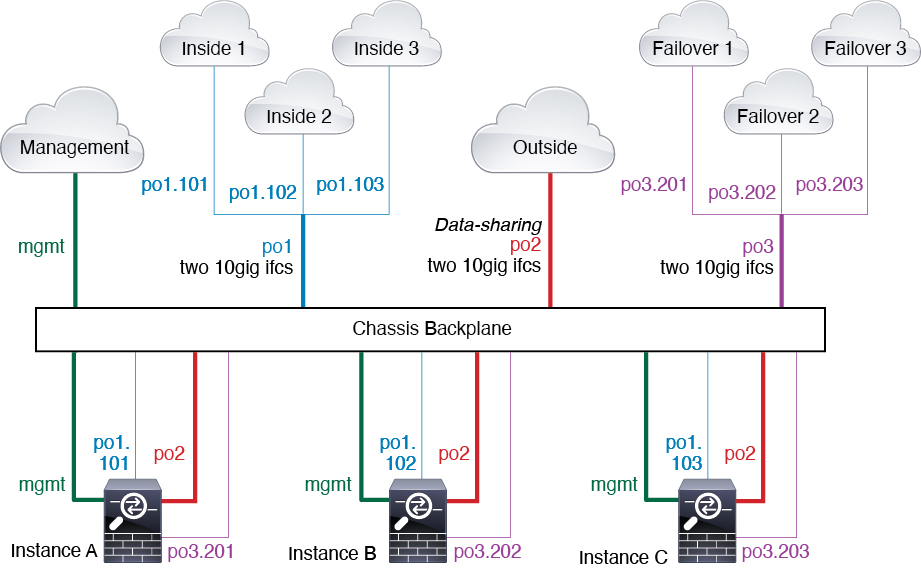
The following example includes three container instances in routed firewall mode. They include the following interfaces:
-
Management: All instances and the chassis use the dedicated Management interface. Within each instance (and the chassis), the interface uses a unique IP address on the same management network.
-
Inside: Each instance uses a subinterface on Port-Channel1 (data type). This EtherChannel includes two 10 Gigibit Ethernet interfaces. Each subinterface is on a separate network.
-
Outside: All instances use the Port-Channel2 interface (data-sharing type). This EtherChannel includes two 10 Gigibit Ethernet interfaces. Within each application, the interface uses a unique IP address on the same outside network.
-
Failover: Each instance uses a subinterface on Port-Channel3 (data type). This EtherChannel includes two 10 Gigibit Ethernet interfaces. Each subinterface is on a separate network.