Chassis interfaces vs. instance interfaces
Chassis interfaces vs. instance interfaces is an interface management model that
-
manages basic Ethernet settings of physical interfaces, VLAN subinterfaces for instances, and EtherChannel interfaces at the chassis level,
-
configures higher level settings within the instance, such as IP addresses for EtherChannels, and
-
allows independent administrative control of interface states in both chassis and instance locations.
VLAN subinterfaces
You can create VLAN subinterfaces within the instance, just as you would for any device.
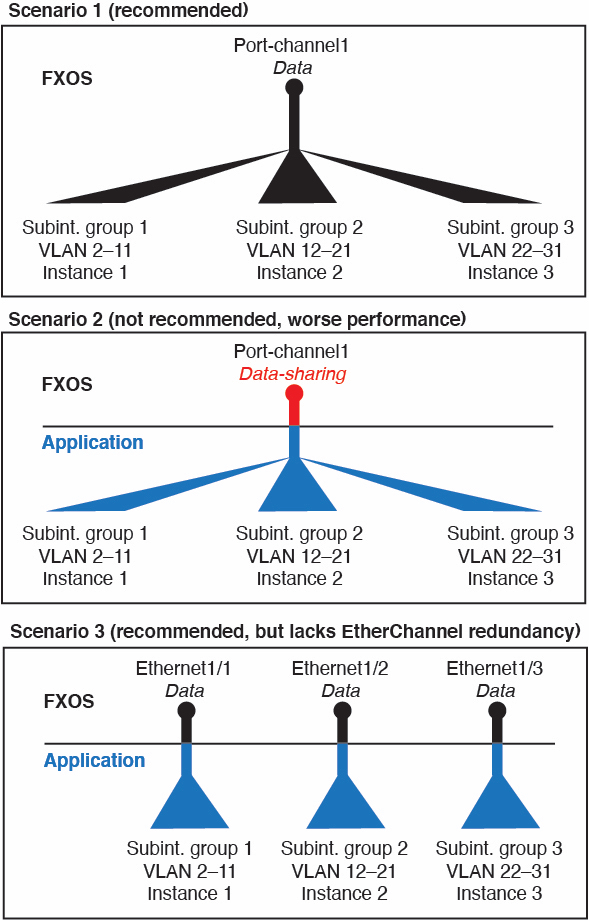
You can also create VLAN subinterfaces in the chassis. The instance-defined subinterfaces are not subject to the chassis limit. Choosing in which location to create subinterfaces depends on your network deployment and personal preference. For example, to share a subinterface, you must create the subinterface on the chassis. Another scenario that favors chassis subinterfaces comprises allocating separate subinterface groups on a single interface to multiple instances. For example, you want to use Port-channel1 with VLAN 2–11 on instance A, VLAN 12–21 on instance B, and VLAN 22–31 on instance C. If you create these subinterfaces in the instance, then you would have to share the parent interface in the chassis, which may not be desirable. See this illustration that shows the three ways you can accomplish this scenario:
Independent interface states in the chassis and in the instance
You can administratively enable and disable interfaces in both the chassis and in the instance. For an interface to be operational, the interface must be enabled in both locations. Because the interface state is controlled independently, you may have a mismatch between the chassis and instance.
The default state of an interface within the instance depends on the type of interface. For example, the physical interface or EtherChannel is disabled by default within the instance, but a subinterface is enabled by default.